
Pet dogs learn to find invasive plants in German conservation project

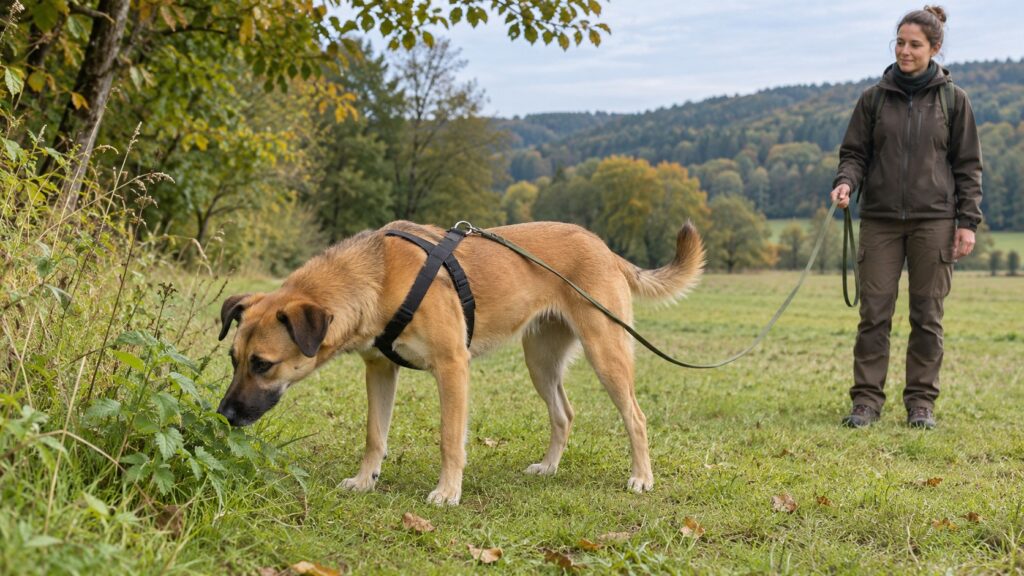


Pet dogs and their owners have taken on a new assignment in a German research project: learning to find invasive plants by scent.[1]
The project brought together volunteers from six German states and professional dog trainers to explore whether companion dogs could help with plant monitoring.[1]
The work offers a look at how scent training can connect a dog's familiar skills with a conservation task, and what owners need to learn along the way.
Researchers tracked 31 dog-handler teams through a program combining online lessons, an in-person practical seminar and preparation for outdoor searches.[1]
Twelve teams completed the final field test, and 11 were recorded as passing.[1]
The study, by Annegret Grimm-Seyfarth and colleagues, was published Nov. 4, 2026, in PLOS ONE.[1]
The participating groups began training in 2021 and 2022.[1]
A plant search starts with an alert
The program focused on knotweeds in the Fallopia species complex, Himalayan balsam and common ragweed, plants the researchers selected because of their spread and effects on biodiversity, the economy or human health.[1]
Owners first taught their dogs a passive alert: a pause and sustained stare at the scent source, without touching it.[1]
The dogs could stand, sit or lie down, provided the response was clear.[1]
Searches then became more difficult, with hidden samples, distractions and unfamiliar locations added as training progressed.[1]
For roughly six months, volunteers followed training plans, shared videos and joined monthly online sessions with experienced trainers.[1]
At the practical seminar, trainers assessed each team's progress and helped owners plan their next steps.[1]
The roster included a miniature schnauzer, a long-haired collie and mixed-breed dogs.[1]
Volunteers were selected partly for their experience, available time and their dogs' health and suitability for the work.[1]
Fresh plants bring a new training task
Plant material gave the teams more to work with than a single, unchanging training sample. Owners used different plant parts and stored material, then worked toward recognizing fresh samples outdoors.[1]
At the practical seminar, five of nine dogs that had not previously trained with fresh samples immediately detected one when it was laid out for a search.[1]
Teams that had practiced with leaves, stems, roots and flowers also had higher detection probabilities in the seminar tests.[1]
The researchers recommend exposing dogs to a variety of target samples as they prepare for fieldwork.[1]
They also favor training plans with clear milestones and room to adjust the intermediate steps to each team.[1]
Training the owners as well as the dogs
Twenty-seven teams completed the online training and 24 took part in the practical seminar, although fewer went on to the final test.[1]
Participants who left cited personal circumstances, including moves and other changes in their lives.[1]
Some who finished said the training had taken more time than they expected, and almost all participants wanted more in-person sessions.[1]
The final field test required teams to find at least half of the plant samples hidden in an outdoor search area, without knowing their number or locations beforehand.[1]
One owner went on to pass the field test with a second dog after the original dog became ill.[1]
This was a pilot with selected volunteers, and the mostly participant-run field tests varied in their setup.[1]
The authors see a role for volunteer teams in plant monitoring, supported by professional trainers and ecologists.[1]
That support includes teaching owners to identify the plants, organize searches and read their dogs' behavior, as well as helping them maintain the dogs' detection skills.[1]
The researchers recommend more supervised field practice and regular contact between volunteers, trainers and project coordinators.[1]
For trainers interested in conservation work, the paper follows a project from the first alert exercises through the practical demands of outdoor searching. Readers can explore the training methods, results and the researchers' recommendations in the original study below.
Read the original study
[1] Grimm-Seyfarth, A., et al. (2026). Opportunities and challenges in training volunteer wildlife detection dog-handler teams for invasive plant monitoring. PLOS ONE. Full paper and abstract.


Responses