
Detection dogs can find earless dragon scat, but field searches pose challenges

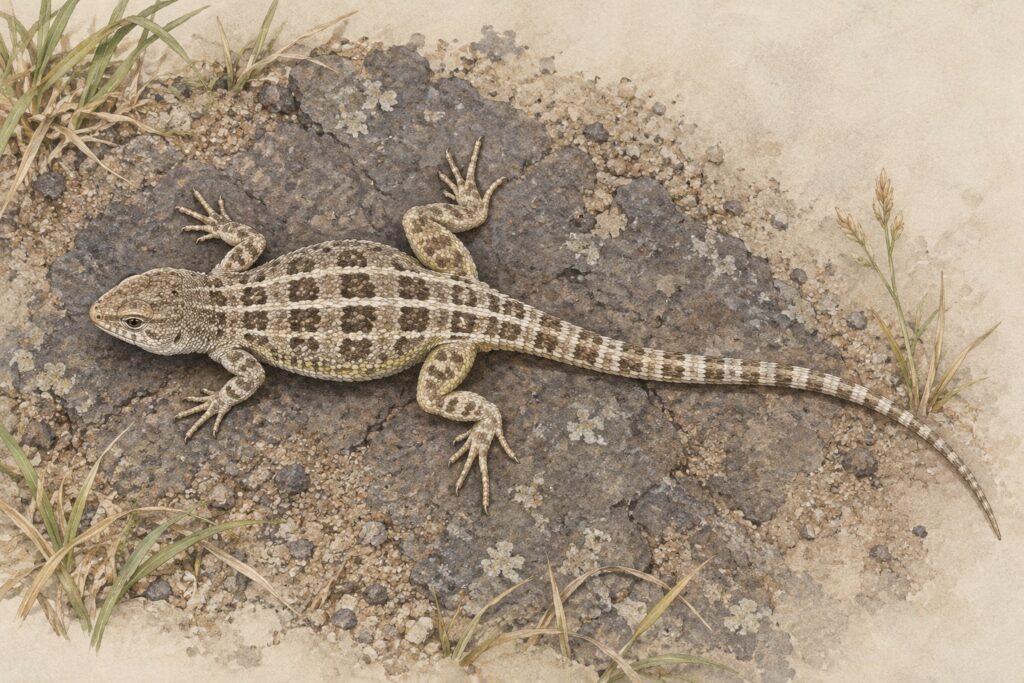


Detection dogs can learn to recognize the droppings of the critically endangered Victorian grassland earless dragon, but finding those tiny traces in the field is more difficult than a successful odor test might suggest. A study published in Wildlife Research on October 13, 2026, reports strong performance with captive-sourced samples alongside two practical problems: transferring that training to wild scat and finding samples before they disappear.[1]
The research concerns Tympanocryptis pinguicolla, the Victorian species rediscovered in 2023 after no confirmed sightings since 1969.[1][2]
Zoos Victoria describes an adult lizard measuring about 15 centimeters from head to tail, with no external ear openings and a history of habitat loss, degradation and fragmentation.[2]
The original study and its public abstract are available from the publisher. An open Zoos Victoria project report provides further background on the detection-dog work.[3]
What the dogs could detect
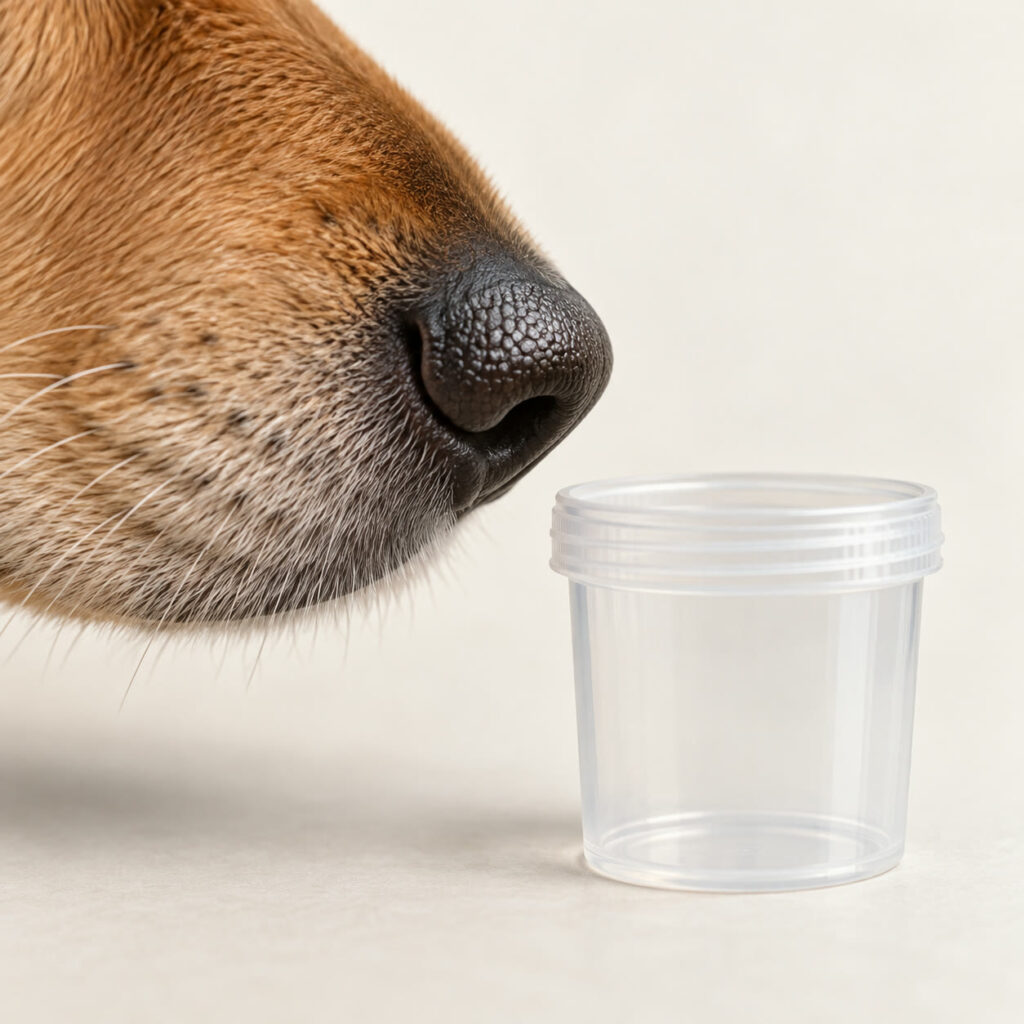
Researchers trained two experienced detection dogs on dragon scat, first from captive animals and then from wild animals. Both achieved 100% sensitivity and precision with fresh and defrosted captive-sourced scat in odor lineups.[1]
Those figures describe the tested lineup conditions, not a guarantee of success across wild populations. The same dogs did not spontaneously generalize to wild-sourced scat on its first presentation; the abstract reports that a second or third presentation was required.[1]
For trainers, that distinction is useful. Success with the available training samples does not establish that a dog will immediately recognize every real-world version of the target. Here, the change from captive to wild samples exposed a transfer problem that the initial lineup result alone would have missed.[1]
What happened in area searches
One dog went on to complete 21 single-blind area searches using novel, captive-sourced dragon scat. The study reports 72.9% sensitivity for those samples and confirmation of target presence in 81.3% of search areas where the target was present. Average time to the first detection was three minutes and 30 seconds, although results varied among search locations.[1]
These are different measures: detecting individual scat samples is not the same as detecting at least one target within a search area. Neither figure should be presented as the percentage of wild dragons found, or as a universal accuracy rating for conservation dogs.
The related 2024 project report adds an important qualification. Its authors could not verify that the scat-detection dogs had found naturally occurring dragon scat at the rediscovery site. Separate dogs trained to locate live dragons did find animals in previously unknown burrows, with an endoscope used to confirm their presence.[3]
That earlier report is background from the same project, not independent replication of the new journal article.
The scat may disappear before a search
The researchers also placed 44 captive-sourced scat samples in dragon habitat for a 50-day persistence study, divided between exposed and contained treatments. Of the exposed samples, 36% persisted for less than 24 hours; only two remained at day 50.[1]
The open project report describes both scavenging and degradation as reasons samples were lost. It also notes that the persistence work took place in summer and recommends further research across seasons.[3]
For a survey team, this means a search without a find needs cautious interpretation: the animal may be difficult to detect, and the physical evidence being sought may no longer be available.
What this means for conservation dog training
The authors recommend training dragon-detection dogs to locate both live animals and scat, rather than relying on scat alone. They identify access to suitable training samples and survey design as important considerations for future use of dog teams in reptile surveys.[1]
This was a small study, involving two dogs in the lineup work and one in the area-search assessments.[1]
It supports further development of a specialist survey method, not a claim that any trained dog can reliably clear an area of concern. The practical lesson is to test transfer to field-relevant samples and measure search performance separately from controlled odor discrimination.
This is specialist conservation work, not an invitation to take pet dogs into sensitive habitat. Zoos Victoria asks anyone reporting a possible sighting to send a photograph to its conservation team.[2]
Reporting note: This coverage uses the publicly accessible abstract of the 2026 paper and the open 2024 project report. The full 2026 paper was not available for review. Results from the two publications are identified separately.




Responses