
What is Foundation Style
Dog Training?
A system built on one simple idea: master the foundation first, and every advanced result becomes easier, kinder, and more reliable.
Foundation first. Everything else follows.
Foundation Style Dog Training relies on mastering foundation knowledge and foundation skills before moving to advanced levels of training. It sounds obvious. Almost nobody in the industry actually does it.
Example one: skills
A trainer who wants to use any form of correction humanely and competently should first be an expert in positive reinforcement. With that foundation in place, corrections in the teaching process can be reduced dramatically and used far more intelligently when they are appropriate at all.
Example two: knowledge
A trainer who wants to solve complex aggression problems should first deeply understand the true behavior and motivations of the canine species through credible science. Plans that work with mother nature succeed. Plans that only suppress her fail.
The Whole Plan
FSDT streamlines training into blueprints that prioritize common denominators, the things nearly every successful behavior plan shares. Those blueprints are used by professional trainers and government organizations internationally, and they are refined continuously by community feedback. The system lives and improves through the trials and successes of many contributors, not the opinions of one person.
Built for Reliability
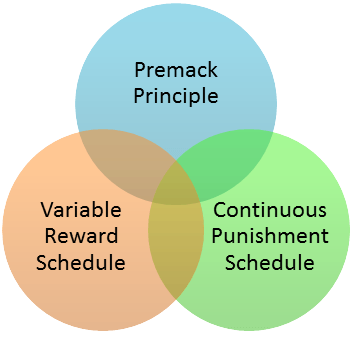
Reliability can mean the difference between life and death for a dog, and it is the entire game for working dogs and aggression cases. FSDT combines scientifically proven reinforcement schedules and principles for both encouraging and discouraging behavior. Together they produce the most reliable training possible for the demanding, ever changing real world.
Clear Communication by Design
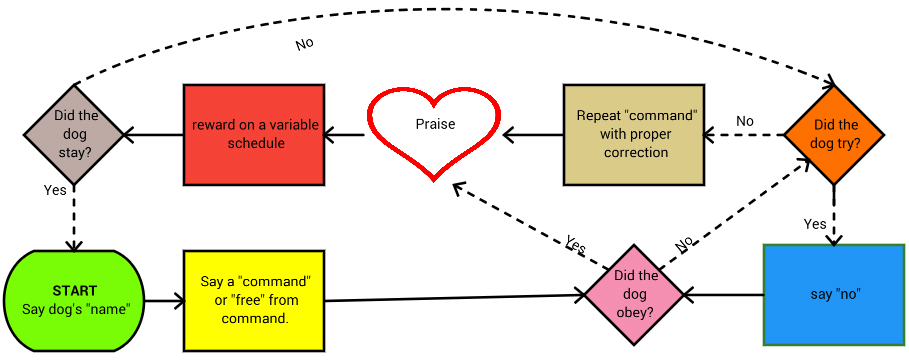
Dogs are not stubborn nearly as often as they are confused. FSDT uses a comprehensive, fair, and predictable command structure so the dog always knows what is being asked and what happens next. Sloppy communication hides in a quiet training room and shows up in real life, exactly when you need it most. A clean structure prevents those side effects before they start.
Quality Control at Every Step
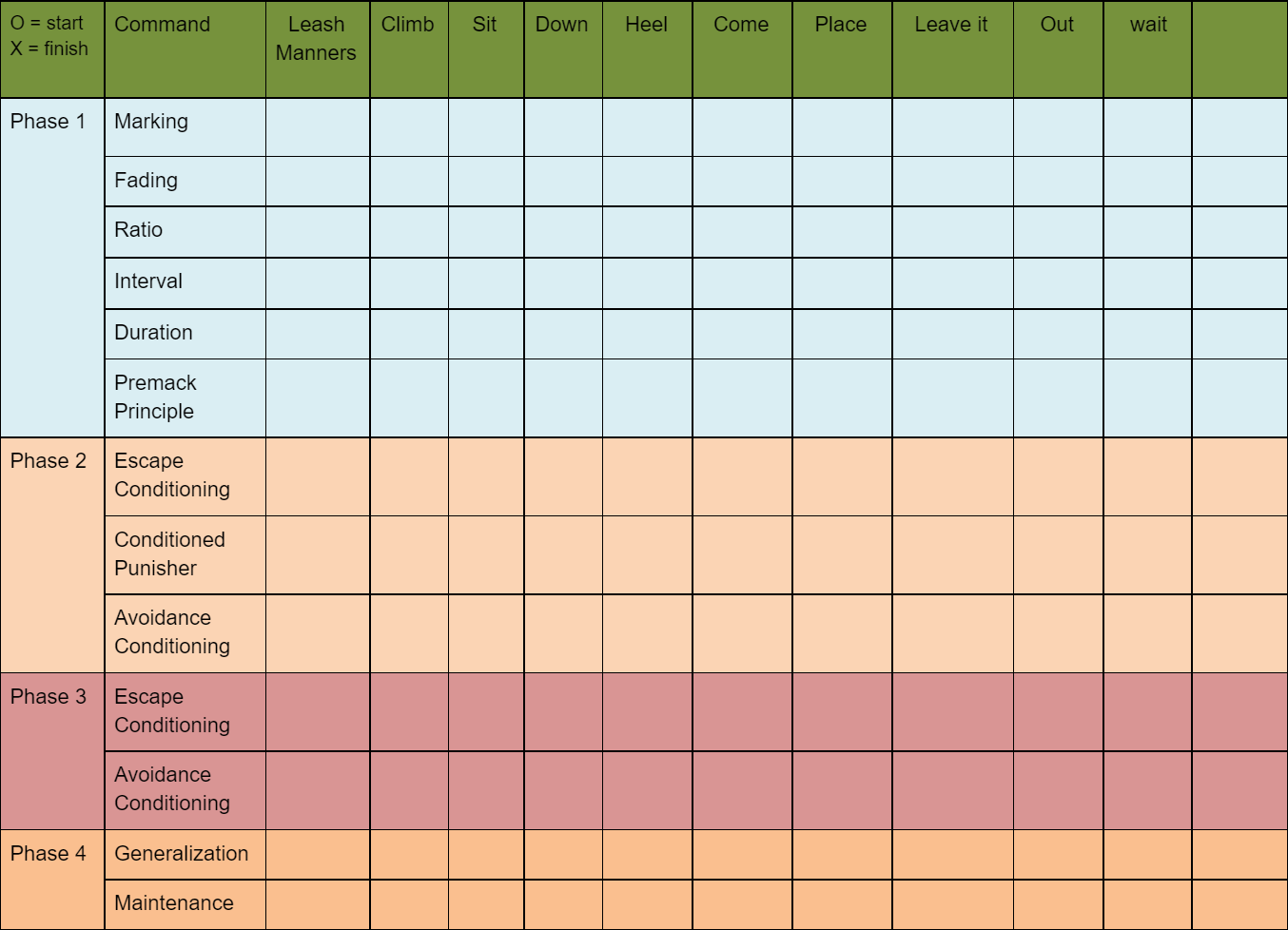
The finished dog is not the only thing that matters. The process matters, taught with proper scientific principles in the correct order. Done right, the dog has a smooth experience and the handler gets a confident, obedient partner. Done out of order, side effects appear. FSDT uses checklists and quality control to pinpoint skipped or incomplete steps, much like error codes in software.
You do not need to become a scientist. You need a plan built by one.
Most owners are handed techniques with no explanation and no order. FSDT gives you the opposite: a clear sequence of easy steps that are nearly impossible to mess up, because the hard thinking was already done for you.
A dog that listens in real life
Not just in the kitchen when you are holding a treat. At the front door, at the park, around other dogs, in the moments that actually matter.
Fair to your dog, always
The system was created out of frustration with the abusive shortcuts common in this industry. Every plan is humane by design and works with your dog's nature.
Help when you are stuck
Anxiety, reactivity, housebreaking, even serious aggression. There is a proven blueprint for it, and a community that has seen your exact problem before.
Become a Dog Training Technologist, not another technician.
Most schools teach you to mimic a branded style from a celebrity trainer, a sport competitor, or a franchise textbook. Educationally, that makes you a technician: someone who repeats procedures without variation, lives in the shadow of the brand, and rarely feels like a true expert. This course is a deeper dive into the science of dog training itself, so you can reverse engineer, analyze, and create unique training plans for any dog and any purpose.
The gold standard, borrowed from human behavior science
In an unregulated industry full of "the school of hard knocks" and being "good with animals," FSDT holds itself to the rigorous standards of applied behavior analysis. Every training plan must be:
Applied & Behavioral
Focused on socially significant, real world behavior that can be objectively measured, not vague impressions of improvement.
Technological & Systematic
Described so clearly that any competent trainer can repeat the plan accurately, grounded in behavioral principles rather than mystery methods.
Effective & General
Producing results large enough for practical use, in different environments, with effects that last.
Accountable & Published
Success is measured repeatedly and plans improve when the data says so. Methods are open to scrutiny with references and statistics. No hidden treatments, no mystical explanations.
Doable
Usable by pet owners, working dog handlers, and shelter workers alike. With proper planning, many plans can be applied by almost anyone willing to invest the effort.
Empowering
Plans give the trainer feedback on results, so you can assess your own skill and build genuine confidence in your effectiveness.
Signature mechanics you will not find anywhere else
Leash Ninja
A standardized, jerk free, pressure free style of leash handling using slides and leash locks, usable for pets, aggression cases, and working dogs.
Pressure Free Tool Use
Training mechanics that dramatically reduce physical coercion, with remote collar protocols that cut typical stimulation to under 1 percent of mainstream instruction while meeting strict LIMA guidelines.
Provable Claims
Foundation Style Dog Trainers back these claims through record keeping and can demonstrate equal or superior reliability with LIMA compliant plans.
The most comprehensive, field tested curriculum in the world.
Coursework is chunked into digestible modules you complete at your own pace. Modules earn badges, courses earn credentials, and credentials can be embedded on your website so clients can verify exactly what you studied.
Behavior Consulting

Obedience Instructor
Health & Husbandry
First Aid

Dog Training Technologist
Behavior Consulting Credential: what it covers
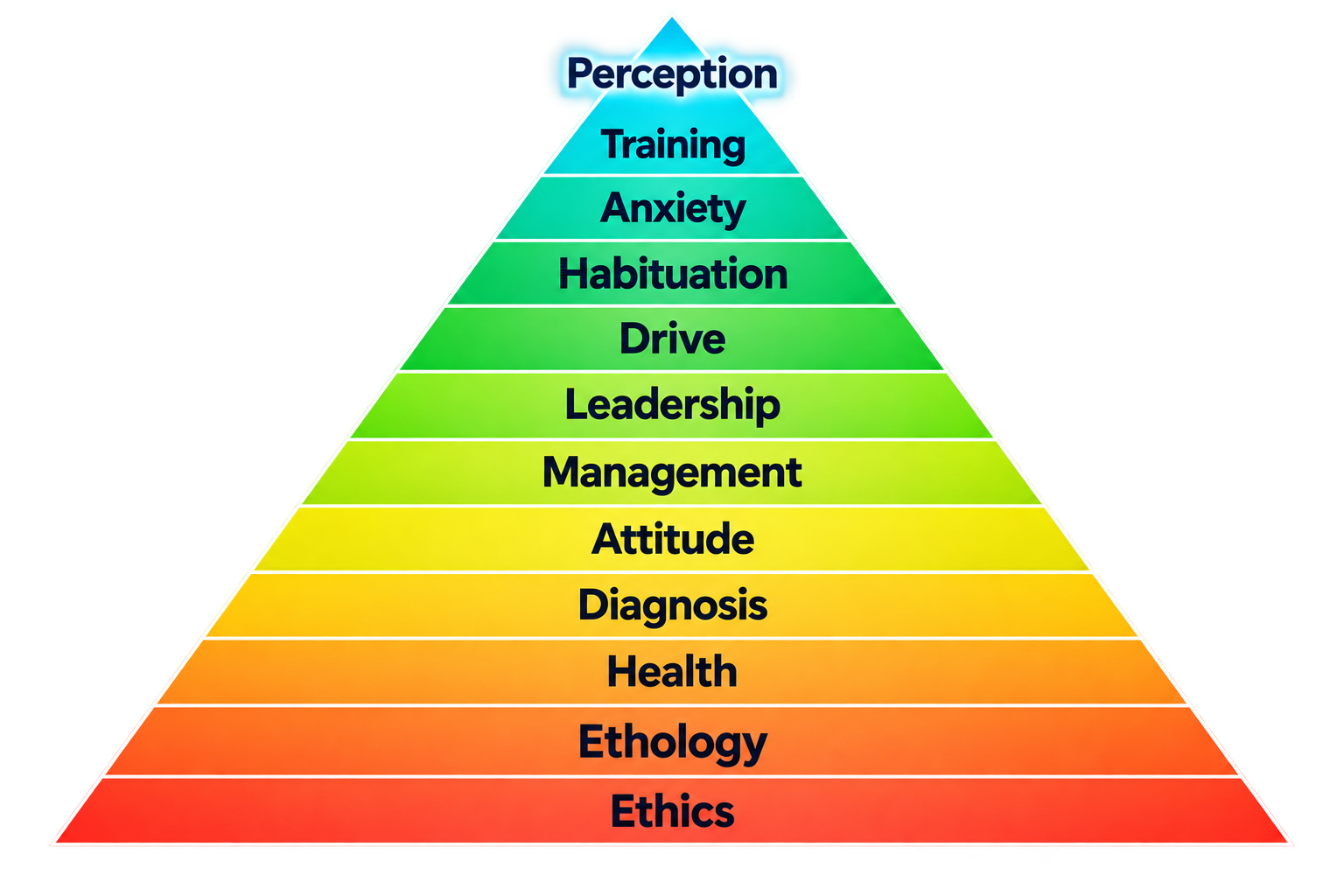
Professional ethics and standards, LIMA, applied behavior analysis in dog training plans, ethology (natural canine social behavior, domestication, breed differences, body language, temperament traits), correctly diagnosing behavior problems, the science of attitude and leadership, drive balancing, and creating training blueprints.
Then the full library of behavior blueprints: puppy plans, housebreaking, anxiety, fear aggression, protective aggression, dominance aggression, barrier frustration, fear biting, resource guarding, territorial aggression, dog on dog aggression, and plans for animal shelters and rescues, plus industry topics like police dog training and force free theory from a scientific and legal perspective.
Obedience Instructor Credential: what it covers
Four phases that build from classical conditioning, the ABC model, operant conditioning, marking, shaping, fading, and reinforcement schedules, through leash handling, long line and muzzle work, into off leash mechanics, remote collar ethics and safety, and the science of punishment level considerations, finishing with generalization plans, maintenance plans, and how to run in kennel, private lesson, group, and virtual training programs.
Health & Husbandry plus First Aid: what they cover
Animal welfare law and compliance, health related behavior, diet, grooming, dental hygiene, vaccination science, internal and external parasites, effects of desexing, and kennel management. The First Aid certification prepares you to prevent and react to all common canine medical emergencies, includes cats, and exceeds standardized pet first aid certifications.
What type of advanced dog training will I learn?
The short answer is everything. Even where a formal course does not yet exist for a specialty, you will understand how to create the plan yourself with the foundation you learn. Members offer their clients protection training, scent work, tracking, assistance training, cart pulling, dock diving, and more.
When you understand the science of dog training you will never need to chase seminars from other trainers, because you will know how to build it yourself using the resources and support inside the membership.
Is it really possible to learn dog training online?
Absolutely, and we take pride in making it possible. Good instruction is a lot of easy steps done in the right order that are nearly impossible to mess up. The most skilled trainers in the world can teach clients in private lessons, group classes, or virtually with a webcam. If you need to touch a client's dog to get results, you are not using quality instructional practices. This hands off approach is also the preferred way to handle many aggression cases and to scale a business.
How are assignments and certifications handled?
Assignments are chunked into modules with individual units. Completing units unlocks the next, and completing modules earns badges other members can see. Most modules start with multiple choice, escalate to written answers, and hands on skills are evaluated through video submission. Completing a full course earns a downloadable certificate plus a virtual credential you can embed on your website or social media.
Who is the head instructor?
Michael D'Abruzzo is the head instructor and founder of K9-1. He took his first dog training elective at SUNY Delhi in 1993 while studying veterinary science and established K9-1 Specialized Dog Training LLC in 1998 after becoming fed up with the abusive techniques common in the industry. K9-1 systems now advise professional dog training organizations, government agencies, rescues, and pet owners.
Mike credits his formal experience as an educator in an Animal Science career school, along with decades in the professional dog training trenches, for his success mentoring other trainers. He believes a student's success has less to do with the teacher's accomplishments and more to do with the teacher's ability to nurture a student into a successful professional. Read the full history here.
Trainers built entire careers on this foundation.
"Over the years I have taken many training seminars, workshops and certification courses, with the biggest names out there. The Foundation Style Dog Trainer course is more valuable than anything else out there. Without any question."
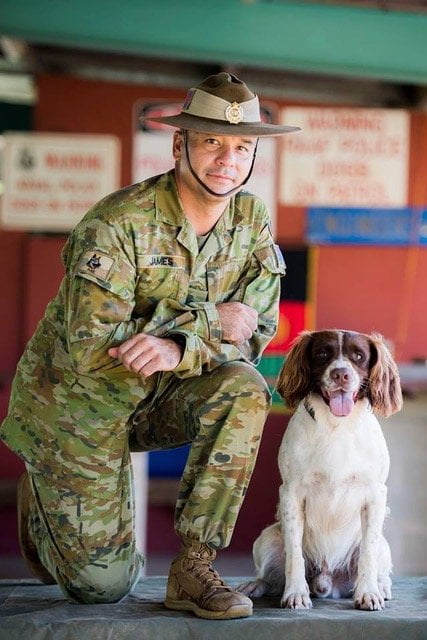
"The foundation style is literally an extension of YOUR style. I will forever be a student of this method and as a result, continue to grow."
Learn the foundation. Own your craft.
Membership includes all current and future coursework, live question and answer sessions, and lifetime support, backed by a 3 day no hassle money back guarantee.
Join Us