

Resource type: Original research — comparative tissue-histology study
Publication
Luca Lacitignola; Salvatore Desantis; Giovanni Izzo; Francesco Staffieri; Roberta Rossi; Leonardo Resta; Antonio Crovace (2020). Comparative Morphological Effects of Cold-Blade, Electrosurgical, and Plasma Scalpels on Dog Skin. Veterinary Sciences, 7(1), article 8. DOI: 10.3390/vetsci7010008
Published online: 12 January 2020.
Reading note: This comparison evaluated skin-tissue samples from four dogs. Histological tissue effects are not the same as comparative long-term clinical outcomes.
Author abstract
The following is the authors’ abstract, not a site-written summary. Wording is retained; paragraph structure and inline typography are formatted for this page.
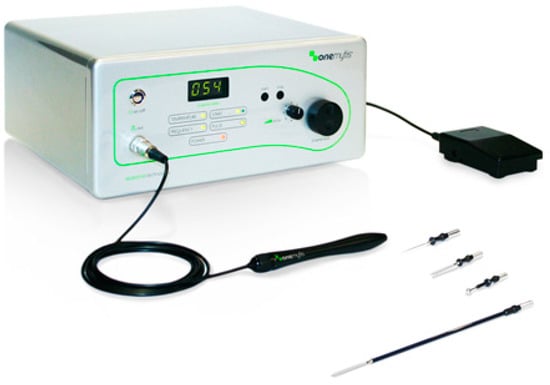
The aim of the present study was to evaluate the histological results of the Onemytis® plasma surgery device with Airplasma® technology. We compared the efficacy and the effect on tissues of the new plasma electrocoagulation system with electrosurgery and a scalpel blade. Samples of healthy skin tissue from four dogs that underwent mastectomy were evaluated. Three different incision modes were used, i.e., a cold blade, electrosurgery, and the Onemytis® plasma scalpel were evaluated histologically to assess invasiveness and tissue injuries at different distances from the cutting surface. The histological examinations showed moderate necrosis caused by Onemytis®, compared to the use of the more invasive electrosurgery, which induces thermal damage that extends beyond 1000 µm. Our study shows that the use of the plasma scalpel reduces the extension of the thermal lesion on the skin compared to an electrosurgical scalpel.
Source and attribution
© 2020 by the authors. Reused under Creative Commons Attribution 4.0 (CC BY 4.0). The researchers named above are the publication authors; this site provides the resource presentation.
Read the original publication · Read the repository copy (Europe PMC)
Presentation changes: bibliographic and resource-type labels added; import formatting cleaned. Author-abstract wording is preserved. Existing images, source URLs and attachments are retained; separately credited material remains subject to its own terms.
Existing publication image